Moth Face Poster scene
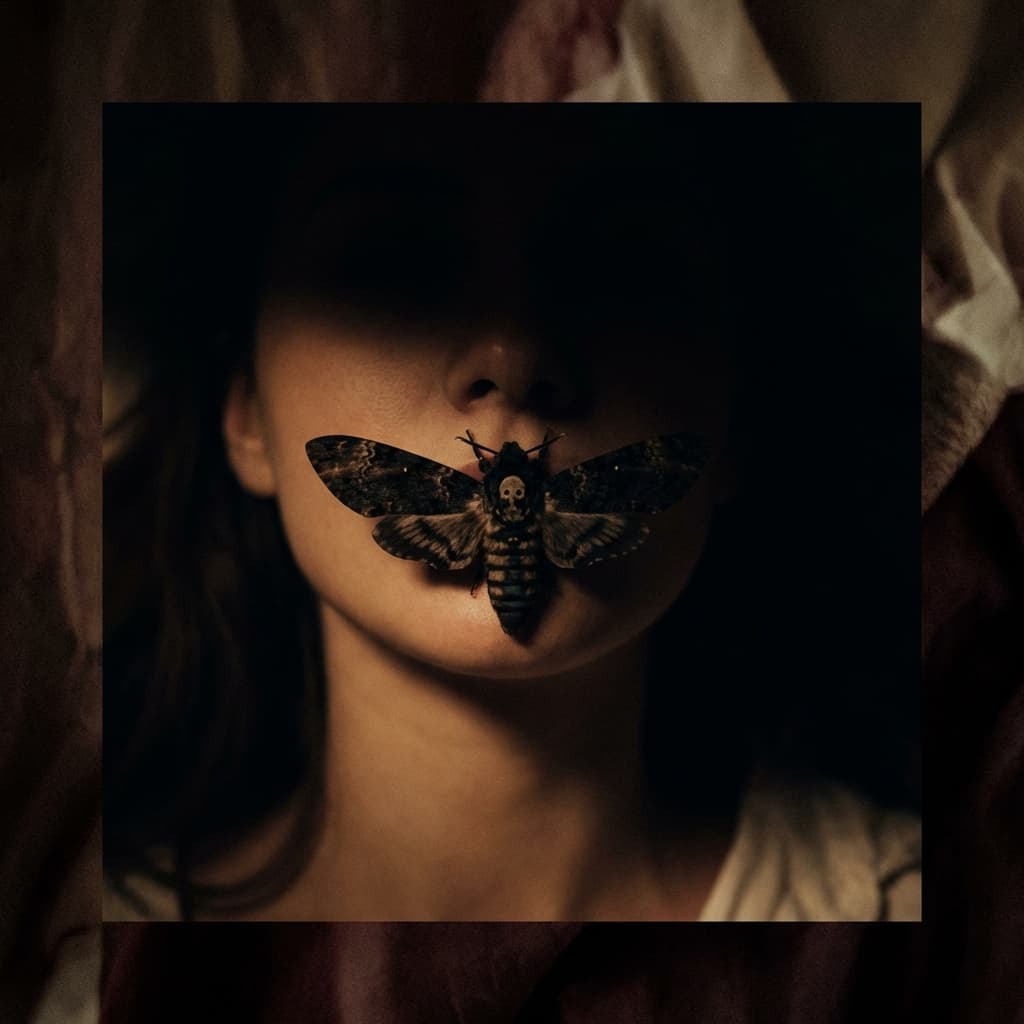
Death's head moth portrait. Use this composition as a reference for a storyboard beat, then plan the motion around it.
Storyboard opens a new project, not a preselected iconic scene.
Recreating Moth Face Poster
Visual composition
A 1991 psychological thriller poster design. A face emerges from deep shadow, only lower half visible in warm flesh tones, lips partially obscured by a death's-head hawkmoth. The moth's distinctive thorax pattern forms a skull image in miniature. Eyes entirely hidden in darkness, creating maximum psychological unease. Muted color palette: browns, burgundy, cream. Clinical yet deeply disturbing, high fashion photography with single overhead lighting source reimagined as horror iconography.
Color palette
Colors specified in the preset recipe, not a guarantee for every generated frame.
- #1c1c1c
- #deb887
- #8b4513
- #800020
- #fffdd0
Adapt the scene recipe
Select and copy this recipe as a shot-planning reference. Adapt its staging and lighting in your scene prompt, or create a custom style in Storyboard's My styles tab using Advanced mode. The custom-style editor has a 1,000-character limit. Camera and lens references describe the intended aesthetic, not how this still was photographed or a promise of video output.
A 1991 psychological thriller poster design. A face emerges from deep shadow (#1C1C1C), only lower half visible in warm flesh tones (#DEB887), lips partially obscured by a death's-head hawkmoth. The moth's distinctive thorax pattern forms a skull image in miniature. Eyes entirely hidden in darkness, creating maximum psychological unease. Muted color palette: browns (#8B4513), burgundy (#800020), cream (#FFFDD0). Clinical yet deeply disturbing, high fashion photography with single overhead lighting source reimagined as horror iconography.
These presets are visual references, not footage from any production. Consider rights to recognizable characters, artworks and likenesses before publishing.
Plan a storyboard around Moth Face Poster
Step 1: Break down the frame
Read the Moth Face Poster recipe and compare its subject placement, light and setting with the still preview. Decide which cues your own scene should preserve.
Step 2: Place it in your story
Create a Storyboard with your script and references. Adapt the recipe in a custom style or scene prompt; this catalog link does not preselect the iconic scene.
Step 3: Plan the adjacent shots
Review the frame alongside the shots before and after it. Specify movement, timing and sound separately rather than treating the still preview as a finished video.

Plan Your Moth Face Poster Storyboard
Plan the shots around Moth Face Poster in a new Storyboard, or explore the scene in Studio for a single-image task. The two workflows are separate.