Pyramids of Giza scene
Pharaoh's eternal tombs. Use this composition as a reference for a storyboard beat, then plan the motion around it.
Storyboard opens a new project, not a preselected iconic scene.
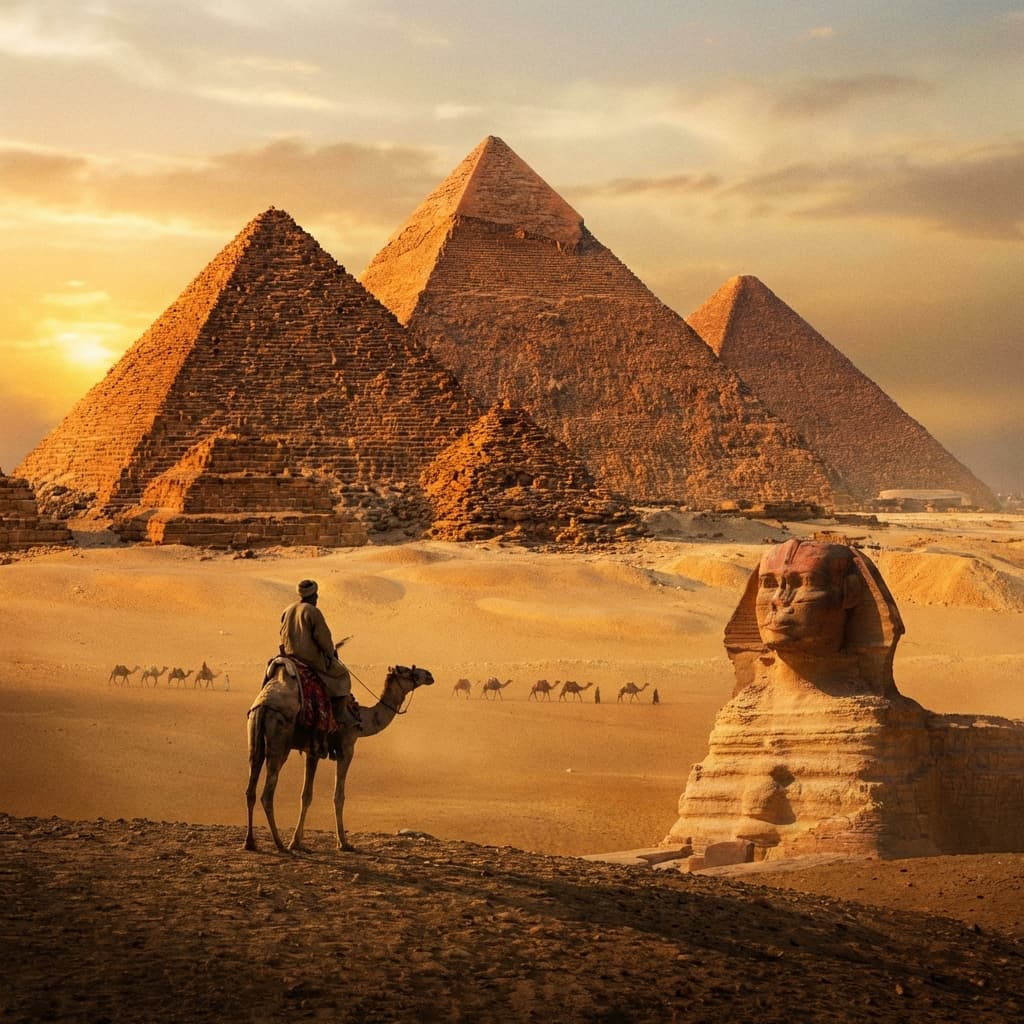
Recreating Pyramids of Giza
Visual composition
Giza Necropolis (c.2560-2540 BC), built for Pharaohs Khufu, Khafre, and Menkaure, shot on medium-format camera with 90mm lens at golden hour. Three great pyramids rise from the desert plateau in weathered Tura limestone and exposed core blocks. Warm sunset bathes the western faces, deep amber shadows on eastern slopes. The Great Sphinx in limestone keeps eternal watch. Camel caravans in silhouette cross golden dunes. The last surviving Ancient Wonder at 4,500 years old.
Color palette
Colors specified in the preset recipe, not a guarantee for every generated frame.
- #c3b091
- #8b7355
- #ff8c00
- #b8860b
- #d2b48c
Adapt the scene recipe
Select and copy this recipe as a shot-planning reference. Adapt its staging and lighting in your scene prompt, or create a custom style in Storyboard's My styles tab using Advanced mode. The custom-style editor has a 1,000-character limit. Camera and lens references describe the intended aesthetic, not how this still was photographed or a promise of video output.
Giza Necropolis (c.2560-2540 BC), built for Pharaohs Khufu, Khafre, and Menkaure, shot on medium-format camera with 90mm lens at golden hour. Three great pyramids rise from the desert plateau in weathered Tura limestone (#C3B091) and exposed core blocks (#8B7355). Warm sunset (#FF8C00) bathes the western faces, deep amber shadows (#B8860B) on eastern slopes. The Great Sphinx in limestone (#D2B48C) keeps eternal watch. Camel caravans in silhouette (#1C1C1C) cross golden dunes (#F4A460). The last surviving Ancient Wonder at 4,500 years old.
These presets are visual references, not footage from any production. Consider rights to recognizable characters, artworks and likenesses before publishing.
Plan a storyboard around Pyramids of Giza
Step 1: Break down the frame
Read the Pyramids of Giza recipe and compare its subject placement, light and setting with the still preview. Decide which cues your own scene should preserve.
Step 2: Place it in your story
Create a Storyboard with your script and references. Adapt the recipe in a custom style or scene prompt; this catalog link does not preselect the iconic scene.
Step 3: Plan the adjacent shots
Review the frame alongside the shots before and after it. Specify movement, timing and sound separately rather than treating the still preview as a finished video.
Plan Your Pyramids of Giza Storyboard
Plan the shots around Pyramids of Giza in a new Storyboard, or explore the scene in Studio for a single-image task. The two workflows are separate.